Most blockchain projects followed a familiar playbook: copy the Ethereum Virtual Machine (EVM) or fragment liquidity across Layer-2 rollups.
Solana is one of the few major networks that chose a different path: building a monolithic architecture engineered for high-throughput, parallel execution from day one.
─────────────── PART 1: TWO PIVOTAL FUNDING MILESTONES
Founded by former Qualcomm engineer Anatoly Yakovenko, Solana introduced Proof of History (PoH)—giving nodes a verifiable cryptographic clock to sequence transactions without round-robin voting delays.
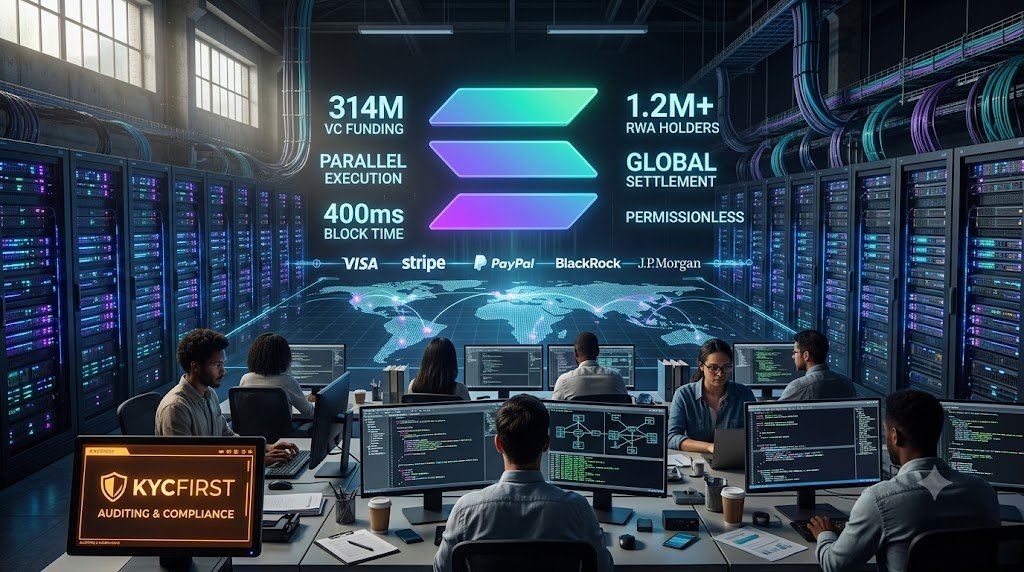
Two landmark capital rounds backed that vision: • July 2019 ($20M Series A): Led by Multicoin Capital, funding testnet development and the March 2020 Mainnet Beta launch. • June 2021 ($314.15M Private Token Sale): Led by a16z and Polychain Capital, securing runway to expand engineering talent, developer grants, and ecosystem liquidity.
The Post-FTX Resilience Test: In November 2022, after FTX collapsed, SOL plunged from $260 to around $8. Critics declared the network dead. Instead, the core team kept shipping code and optimizing stability. Rebounding from an $8 low into an institutional testing ground proved rare operational stamina in Web3.
─────────────── PART 2: AMONG THE FASTEST, AND HARDEST TO CLONE
Code can be forked, but Solana’s infrastructure moat is difficult to replicate:
• Parallel Execution (Sealevel): Processes non-overlapping transactions across multi-core CPUs simultaneously. • Early Forwarding (Gulf Stream): Forwards transactions to upcoming slot leaders without relying on a large traditional mempool, cutting confirmation latency. • Enterprise Hardware Baseline: Running a validator requires high-spec servers (high-core CPUs, 128GB+ RAM, NVMe storage, and symmetric multi-gigabit bandwidth).
Anyone can fork a GitHub repository. Replicating an active global validator set, developer density, and deep liquidity built over years is an entirely different barrier.
─────────────── PART 3: AN INSTITUTIONAL TESTING GROUND FOR TOKENIZED ASSETS
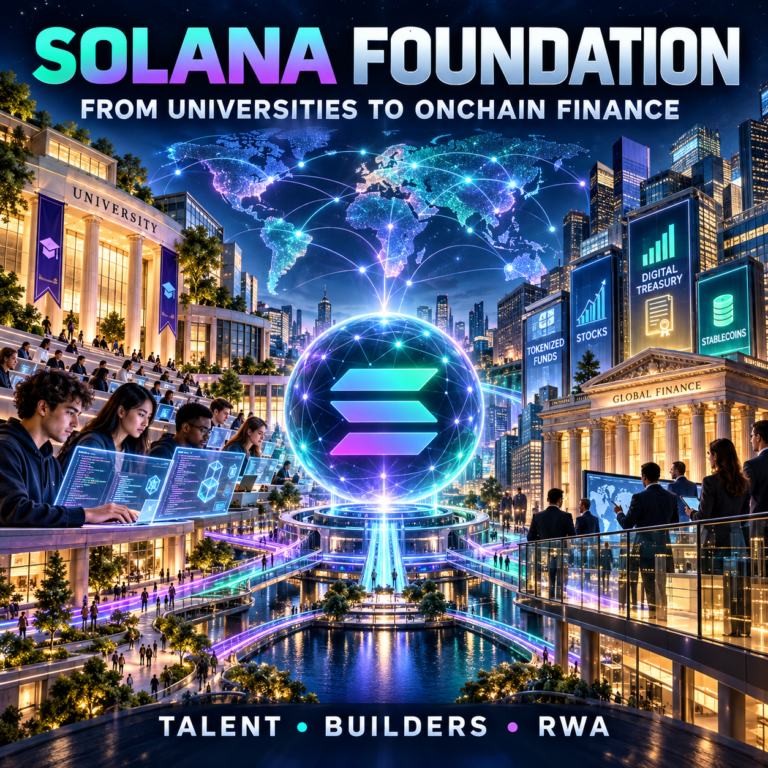
Solana leads in transaction velocity and wallet adoption for tokenized assets, even if older chains hold higher total value locked (TVL):
• 1.2M+ Wallets Holding Tokenized Equities: Reaching a record ATH, with 775,000 wallets added in September alone. (Note: These reflect on-chain addresses, not verified distinct individuals). • Ondo Finance: Offers 260+ tokenized U.S. stocks and ETFs across major chains, with active trading volume settling on Solana. • J.P. Morgan & Galaxy Digital: In late 2025, J.P. Morgan arranged a landmark ~$50M commercial paper issuance for Galaxy Digital, settled on Solana via USDC. • Institutional Asset Pilots: BlackRock (BUIDL) and Franklin Templeton (BENJI) expanded money market experiments on-chain. • Settlement Rails: PayPal launched PYUSD, Western Union introduced USDPT, MoneyGram runs a validator and cash pilot, while Visa and Stripe continue integrating settlement tests.
─────────────── PART 4: ENGINEERING CULTURE & CLIENT DIVERSITY
Solana’s progress reflects engineering pragmatism:
- Verifiable Code: Prioritizing open-source repositories, technical audits, and testable upgrades over speculative hype.
- Client Decentralization: Spun off core engineering into Anza to maintain the Agave client, while Jump Crypto builds Firedancer (in C++) to eliminate single-client risk.
- Direct Incident Handling: Resolving network congestion with concrete protocol upgrades like QUIC and localized fee markets.
─────────────── THE KYCFIRST VERDICT
A blockchain’s viability is not measured by how long it forces users to wait. It is measured by battle-tested infrastructure under real load, verifiable development, transparent incident handling, and the ability to attract real economic utility.
#Solana #SOL #RWA #Tokenization #Blockchain #KYCFIRST #Web3Infrastructure