Here is the Web3 paradox.
A Mobile Mining project may promote a new blockchain, decentralized AI, advanced security, and millions of transactions per second.
Its app can record mining sessions, referral activity, advertisement views, and user scores every day.
But when users ask for two basic services, everything suddenly becomes “too difficult”:
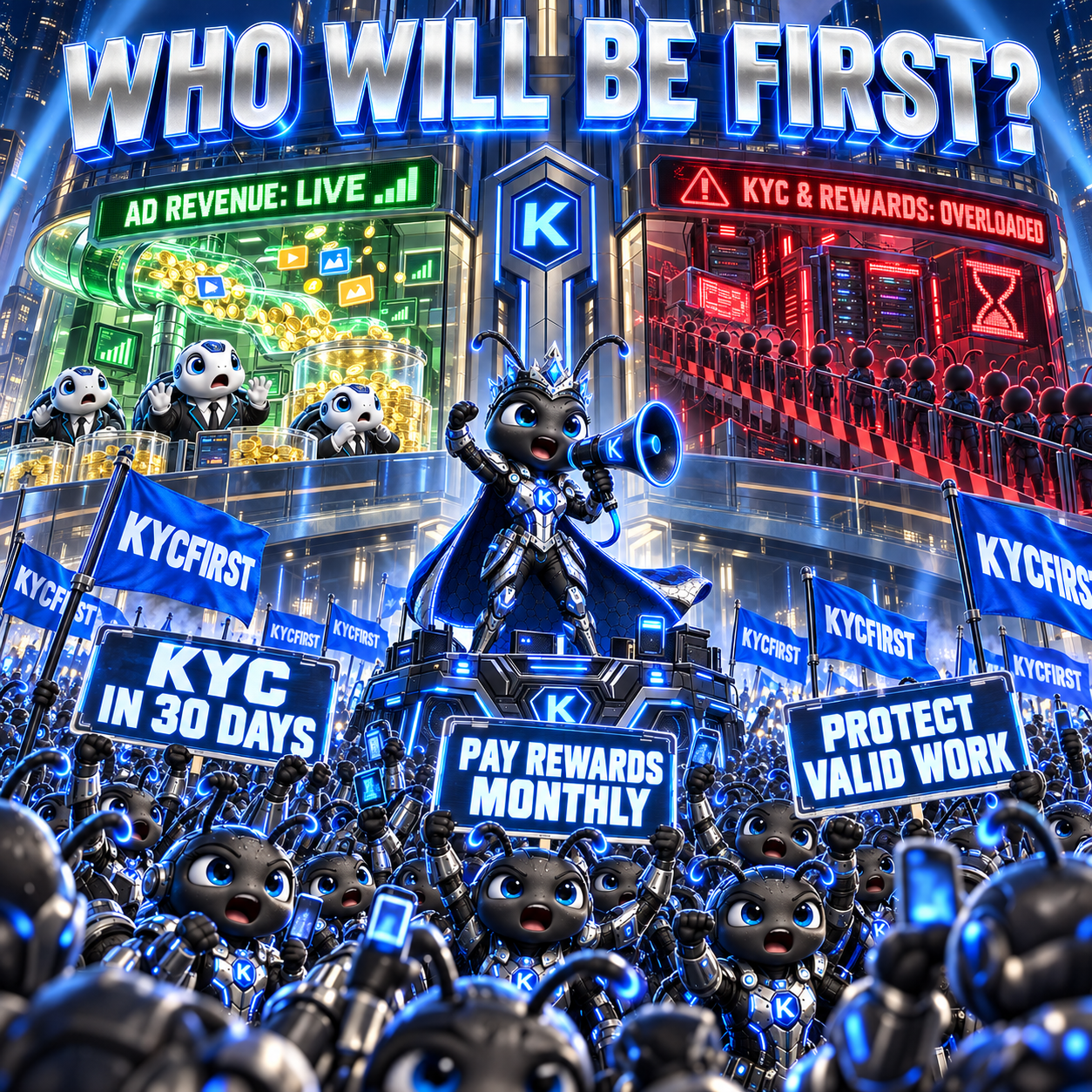
- Complete KYC within 30 days.
- Close and pay rewards every month.
The same explanations may continue for years:
“The system is overloaded.”
“The algorithm needs more time.”
“KYC must open in small batches.”
“We must protect the network.”
Fraud prevention is necessary.
Fake accounts should be removed.
A failed KYC case may need another review.
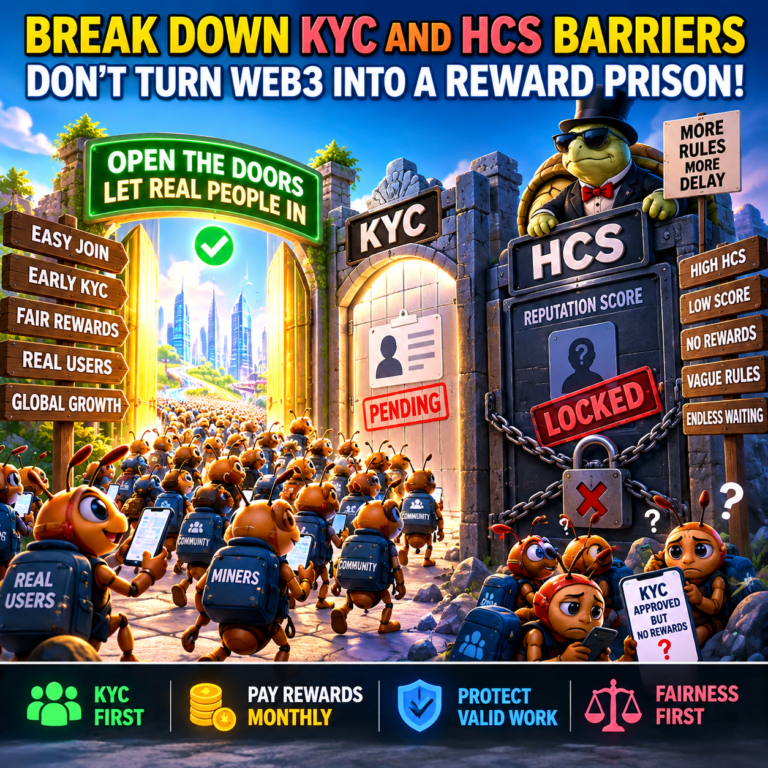
But these are not valid reasons to place every real user in an endless waiting line.
THE SYSTEM WORKS FAST WHEN IT CREATES VALUE FOR THE PROJECT
Advertisements can load inside the app.
Views and clicks can be recorded.
Daily mining sessions can be counted.
Referral relationships can be stored.
Activity scores can be updated.
If a system can record these events every day, it should also be able to produce a clear monthly reward statement.
The real question is no longer whether a database can total the numbers.
The real question is whether user settlement is a priority.
THE SYSTEM BECOMES SLOW WHEN USERS ASK FOR THEIR SHARE
When users ask about rewards, the answers are often unclear:
How much self-mined coin is confirmed?
How much referral reward is confirmed?
What happens to security-circle rewards?
What is the monthly closing date?
What is the payout date?
Can a confirmed reward be removed later?
Without these answers, a number shown inside an app is not yet a settled asset.
“Coming later” is not a payment policy.
“Calculated by AI” is not a clear reward table.
“Wait for mainnet” is not an unlimited deadline.
WHY DOES THIS PROBLEM CONTINUE?
An unsettled balance can keep users returning to the app.
Users may continue mining because they are afraid of losing past effort.
Inviters may continue bringing new people because their rewards are still pending.
This does not prove bad intent in every project.
But it creates an unfair incentive:
The project may receive attention, traffic, data, promotion, and advertising value now.
The user receives a promise with no fixed settlement date.
Early KYC would also reveal how many accounts belong to verified people.
Monthly reconciliation would turn marketing promises into clear obligations.
That is not a threat to a serious project.
It is the foundation of trust.
THE KYCFIRST STANDARD
- VERIFY EARLY
Complete KYC for every eligible new user within 30 days.
If verification fails, state the reason and provide a fair review process.
- CLOSE REWARDS MONTHLY
Set a fixed monthly closing date for self-mined coins, referral rewards, security-circle rewards, and every other published reward.
Show what was confirmed, rejected, or still under review.
- PAY REWARDS MONTHLY
Set a clear monthly payment date.
Transfer confirmed rewards to the user’s wallet or provide a verifiable settlement record.
Changing a number inside the app is not the same as paying a reward.
- PROTECT VALID WORK
Do not remove a confirmed reward because an invited user becomes inactive later.
Do not use a new rule or an unclear AI score to erase work completed under earlier rules.
Dozens of projects can launch a mining button.
The real leader will be the first project that turns promises into deadlines, records, and regular payments.
Until then, users should ask one question before mining or inviting anyone:
WHEN WILL MY WORK BE VERIFIED, CLOSED, AND PAID?
VERIFY EARLY.
CLOSE REWARDS MONTHLY.
PAY REWARDS MONTHLY.
PROTECT VALID WORK.
KYC FIRST. REWARD FIRST. FAIRNESS FIRST.
#KYCFIRST #KYCF #MobileMining #MonthlyRewards #CryptoTransparency #Web3Fairness