A Mobile Mining app can be launched quickly.
Create a daily check-in button.
Add a coin counter.
Add referral codes.
Connect advertisements.
Publish a roadmap that lasts for years.
Then attract users with a familiar promise:
“Join early today and receive a valuable asset in the future.”
But building an app does not mean building a real blockchain, a working economy, or a sustainable business.
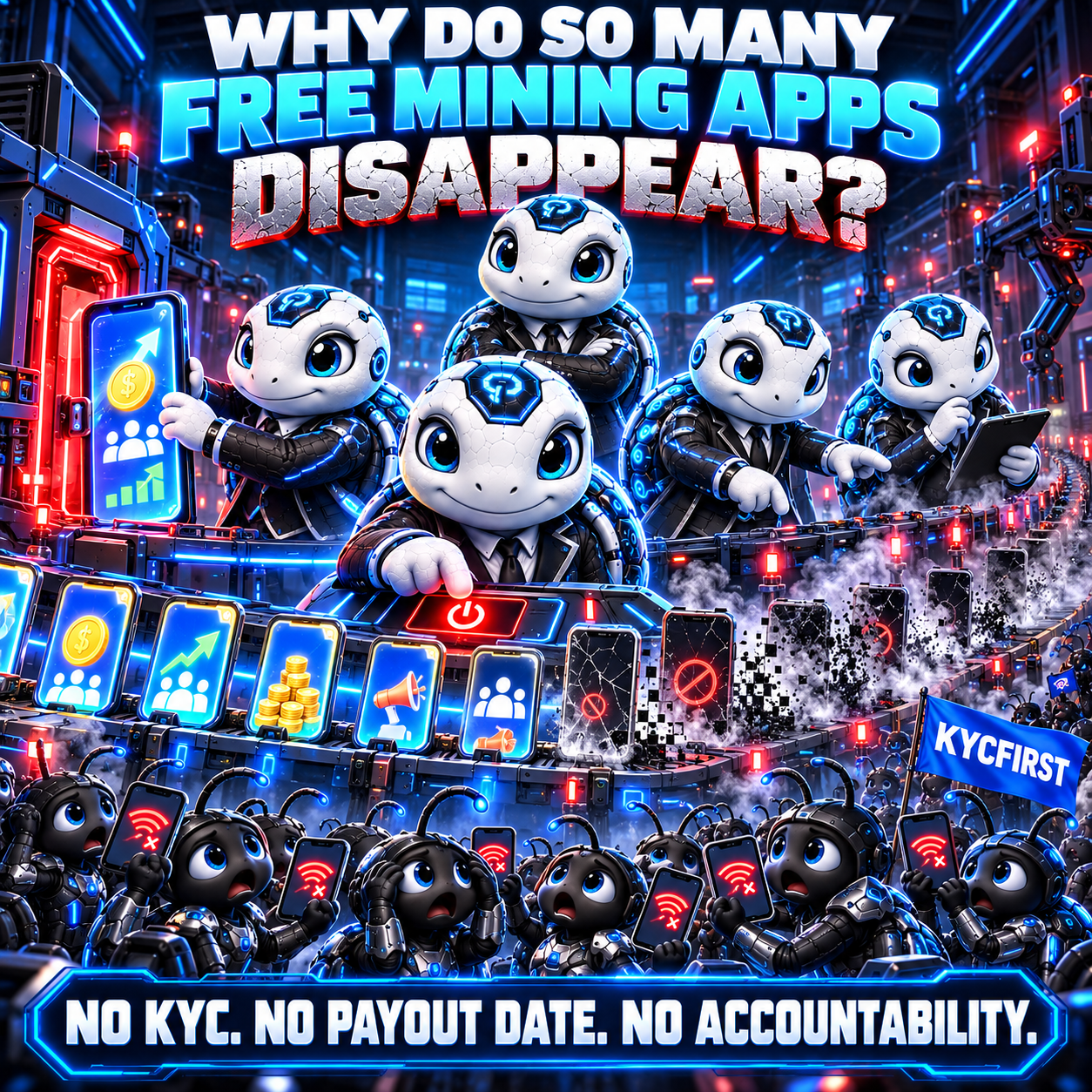
There is not enough independent data to claim that exactly 90% of Mobile Mining apps disappear.
However, many projects follow the same lifecycle.
- THE APP COMES BEFORE REAL VALUE
A project may issue reward points before it has a working blockchain, block explorer, self-custody wallet, real product, or demand for its coin.
The balance increases every day.
But there may be no proof that those points will become assets that users can own, transfer, or use.
- GROWTH DEPENDS ON NEW USERS
Early growth often comes from referral codes.
Existing users invite new users.
New users watch advertisements and invite more people.
When recruitment slows, app activity falls, advertising revenue falls, and the community loses interest.
If the project has no product beyond daily check-ins and referrals, the entire model begins to weaken.
- REWARDS GROW FASTER THAN THE PROJECT’S ABILITY TO SETTLE THEM
A project can add billions of coins to user balances at almost no immediate cost.
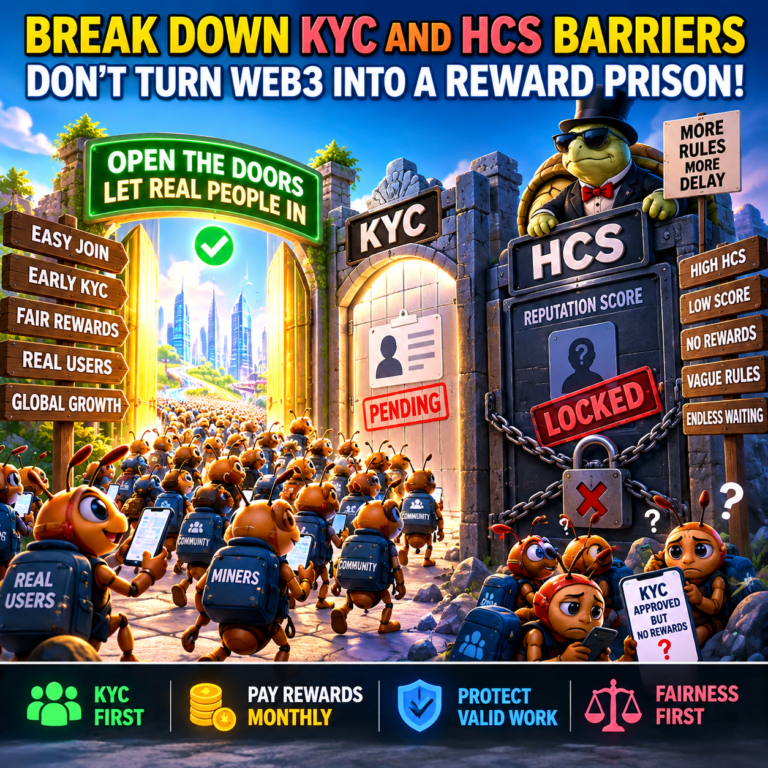
But KYC, balance confirmation, liquidity, wallets, and reward distribution create real obligations.
Instead of settling rewards, some projects continue using familiar messages:
“Wait for mainnet.”
“Wait for the AI review.”
“Improve your trust score.”
“Wait for your referrals to complete KYC.”
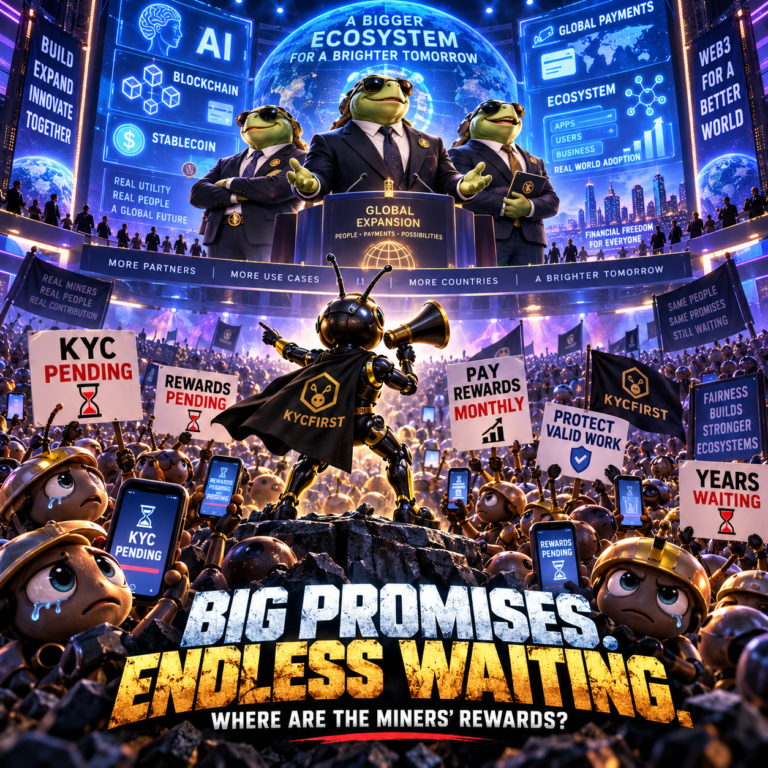
Without a closing date and a payment date, a promise can continue forever.
- THERE IS NO SUSTAINABLE SOURCE OF VALUE
Advertising may support a project during its early stage.
But advertisements alone cannot create long-term demand for a coin.
A real ecosystem needs products, real users, developers, liquidity, service fees, and reasons to use the token.
If the only source of value is advertising views from miners, the project may struggle when users stop opening the app.
- THE TEAM HAS LITTLE ACCOUNTABILITY
Some projects do not publish a legal entity, address, budget, financial report, or the names of responsible people.
If the app closes, the website disappears, or social accounts stop updating, users may have nobody to contact.
The same team may later return with a new project name.
But users cannot recover the time, data, and personal trust they already spent.
- FRAUD, SECURITY, REGULATION, AND OPERATING COSTS
Not every failed project is a scam.
Some projects fail because they run out of money, suffer bot attacks, face security problems, violate app-store rules, or cannot meet legal requirements.
A serious team should explain the problem, publish a recovery deadline, and protect valid user rewards.
Silence and disappearance are not a roadmap.
ASK THESE SEVEN QUESTIONS BEFORE JOINING
Is the team and legal entity public?
Where is the working blockchain or verifiable ledger?
When will KYC be completed?
What is the monthly reward closing date?
What is the monthly payment date?
Are confirmed rewards protected from future rule changes?
What creates value beyond advertisements and new referrals?
“Free coin mining” is not completely free.
Users pay with their time, attention, data, devices, and personal reputation.
A project that respects those contributions must provide clear rules and clear deadlines.
VERIFY EARLY.
PAY REWARDS MONTHLY.
PROTECT VALID WORK.
KYC FIRST. REWARD FIRST. FAIRNESS FIRST.