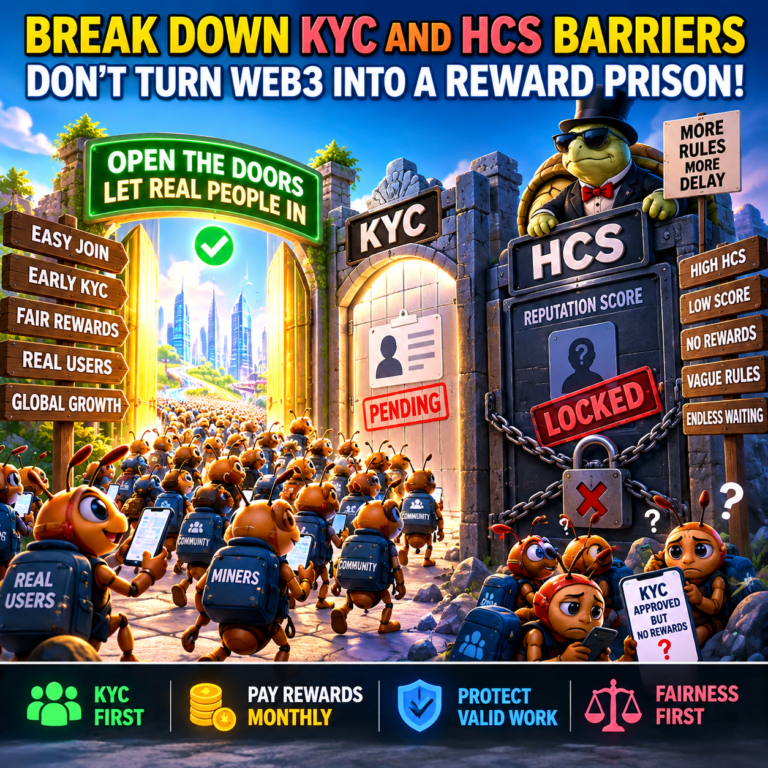
ARE MOBILE MINING PROJECTS PLAYING FAIR WITH THE PEOPLE WHO PROMOTE THEM?
Many people see a referral code and think the inviter only shares a link and waits for rewards.
The reality is very different.
I have spent an entire month researching a project, reading its documents, writing posts, creating images, making videos, answering comments, and helping new users install the app.
Some months, I worked on content almost every day but did not attract a single referral.
Sometimes a post performed well and brought in a few referrals or even a few dozen. However, this usually lasted only during the first few months.
When the project was no longer new, the community became doubtful, or many similar apps appeared, the number of new users quickly declined.
A referral is not free.
Imagine someone spends two hours per day for 30 days researching, creating content, and supporting the community.
That is 60 hours of work.
Even if that time is valued at only $2 per hour, the cost is already $120.
This does not include internet access, devices, software, paid advertising, or personal reputation.
If that person attracts only one user during the month, the cost of creating that referral may exceed $100.
If nobody joins, the content creator carries the entire cost.
When referrals do join, the project immediately receives value:
- More registered accounts.
- More advertising views.
- More activity and user data.
- Greater brand visibility.
- A distributed promotion team working at little or no direct cost to the project.
But what does the inviter receive?
In many Mobile Mining projects, referral rewards are only numbers displayed inside an app.
There is no monthly closing date.
There is no payment date.
Users do not know how long a referral must remain active.
They do not know which KYC conditions the referral must complete.
They do not know whether recorded rewards will be removed if the referral later stops mining.
The inviter has already completed the work of bringing a real user to the project.
However, the reward may remain locked for years or disappear because of a decision the inviter cannot control.
That is not a balanced system.
The project can receive advertising revenue every day, while promoters wait indefinitely for their rewards.
The project gains users, data, activity, and community reach.
The inviter carries the cost of time, content, support, and personal reputation.
If a referral leaves because the project delays KYC, lacks useful products, or becomes less attractive, why should the inviter lose a valid reward earned earlier?
A fair system should be simple:
- Verify eligible new users within 30 days.
- Publish clear reward conditions from the beginning.
- Close and pay mining rewards, referral rewards, and other announced rewards every month.
- Do not remove valid rewards simply because a referral becomes inactive later.
- Do not use new rules to erase work completed under earlier rules.
- Provide clear settlement records that users can verify.
Referral teams are not free labor.
They are the project’s distributed sales, marketing, education, and community-support force.
A project cannot demand rapid growth while transferring all costs and risks to its users.
If creating one referral can require more than $100 worth of work, the reward cannot remain only a promise without a payment date.
VERIFY EARLY.
PAY REWARDS MONTHLY.
PROTECT VALID WORK.
#KYCFIRST #MobileMining #ReferralRewards #PayRewardsMonthly #CryptoTransparency